
Ever catch yourself slumping over your phone or leaning forward in your chair? Your back rounds, shoulders slide forward, and your neck works too hard. It doesn’t happen in one day, it builds slowly.
Your body slouches when the muscles that hold you upright get tired or weak. Instead of standing tall, other muscles start doing extra work, which can leave you feeling tight, sore, or drained.
Yoga can gently retrain your body. Instead of forcing “sit straight,” it builds strength in the deep support muscles that help you stay upright without thinking about it.
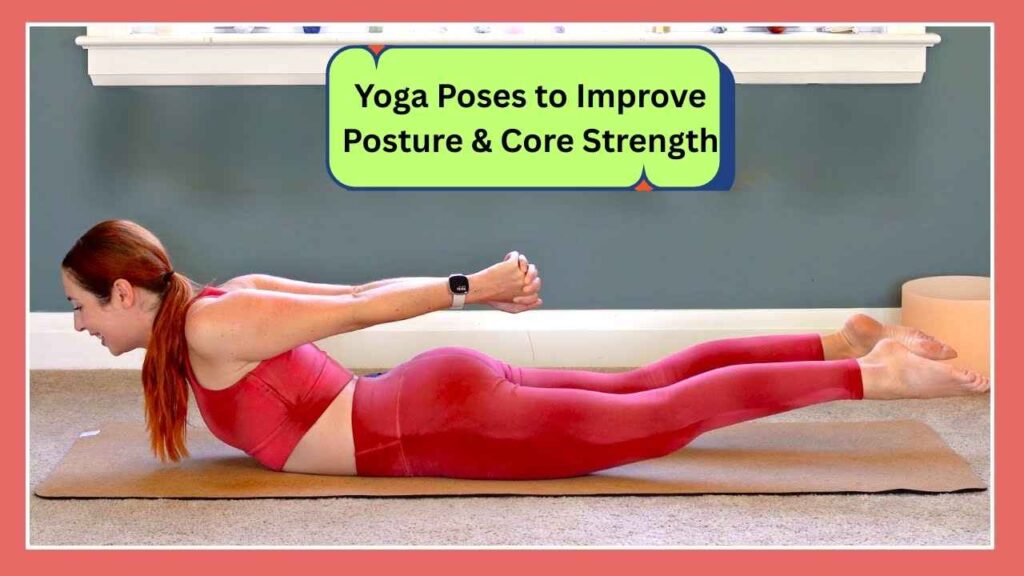
Yoga Poses to Improve Posture & Core Strength
Many people try to “fix” posture by pulling their shoulders back. That doesn’t last long because posture is supported from the middle of your body, not just your upper back.
Your core muscles wrap around your stomach and lower back like a natural support belt. When these muscles wake up, your spine feels supported and your body doesn’t collapse forward as easily.
That’s where these yoga poses help, they teach your body how to hold itself in a strong but relaxed way.
Try These 8 Yoga Poses
Ready to improve how you sit and stand each day? Check out the eight yoga poses below that focus on balance, control, and deep support muscles instead of big stretches.

1. Wall Stand Alignment
Stand with your back against a wall. Let the back of your head, shoulders, and hips gently touch it. This helps you feel what upright posture actually feels like.
2. Dead Bug Pose
Lie on your back with arms and legs raised. Slowly lower the opposite arm and leg. Your stomach muscles stay active to keep your back steady.
3. Dolphin Hold
Place forearms on the floor and lift hips slightly. This strengthens shoulders and upper back, which help prevent rounded posture.

4. Half Locust Lift
Lie on your stomach and lift one leg at a time. This strengthens the lower back and glutes, key muscles for standing tall.
5. Knee Hover Table
From hands and knees, lift your knees slightly off the floor. Your core switches on to hold your body stable.
6. Side-Lying Leg Lift
Lie on your side and lift your top leg slowly. This works side hip muscles that help keep your pelvis and spine balanced.

7. Reverse Tabletop
Sit with hands behind you and lift hips. This opens the chest and strengthens the back side of your body.
8. Standing Balance Reach
Stand on one foot and reach forward slightly. Your core and back work together to keep you steady.
What These Poses Train
| Area | Why It Matters for Posture |
|---|---|
| Deep core | Supports spine naturally |
| Glutes | Help keep hips stable |
| Upper back | Prevents shoulder rounding |
| Side hips | Keeps body balanced |
| Lower back | Supports upright standing |
Why Small Practice Works Best
Short, regular sessions help more than long, tiring workouts done rarely. Just a few minutes a day keeps these support muscles active and reminds your body how to stay upright.
Consistency helps your posture improve in a way that lasts, instead of temporary changes that disappear quickly.

Common Posture Mistakes to Watch For
- Leaning toward screens
- Sitting without back support
- Crossing legs for long periods
- Looking down at your phone often
- Standing with weight on one leg
Even with exercise, daily habits can affect your posture. Becoming aware of these habits helps you correct them gently.
What to Expect Over Time
As your core and back muscles grow stronger, you may feel less tightness in your shoulders and neck. Your posture feels steadier, and daily activities begin to feel more comfortable overall.
Helpful Daily Habits For Better Posture
Yoga helps a lot, but simple daily habits also make a difference.
- Keep both feet on the floor while sitting.
- Avoid leaning forward toward screens.
- Take movement breaks.
- Adjust chair and screen height.
- Strengthen your body, not just stretch.
How to Feel the Change
You may not see a big difference in one day, and that’s normal. Posture improves slowly as your muscles learn to support your body in a more steady and balanced way.
After regular practice, sitting feels easier and standing feels lighter. Your body doesn’t slump forward as quickly, even when you’re busy or distracted during the day.
Over time, your posture starts to feel natural instead of forced. Your shoulders relax, your neck feels less tight, and your back feels more supported.

How Better Posture Helps Your Whole Body
Improved posture doesn’t just change how you look. It helps your body function more comfortably.
Better alignment allows easier breathing, reduces extra strain on joints, and helps your muscles work more efficiently during daily tasks.
You may also feel less tired at the end of the day because your body isn’t fighting gravity as much.
The Simple Truth
Posture improves when your body becomes strong enough to hold you upright without strain or tension. These poses build steady, quiet strength that supports you during everyday movements like sitting, standing, and walking.
You don’t have to keep reminding yourself to “sit straight” all day long. When your core and support muscles work properly, your body naturally stays more upright with less effort.