
Some days feel heavier than others, even when nothing obvious is wrong. You wake up tired, your mind feels crowded, and small things seem harder to handle. This kind of mental strain builds quietly over time.
Modern life rarely gives the brain real rest. There is always something to think about, plan, or worry over. Even when your body is still, your thoughts keep moving.
Many people look for big solutions, but sometimes support comes from small, gentle habits. Yoga is one of those habits that works in the background, slowly helping the mind and body return to balance.
It does not demand perfection or extreme effort. It simply invites you to breathe, move, and pay attention for a few minutes each day.
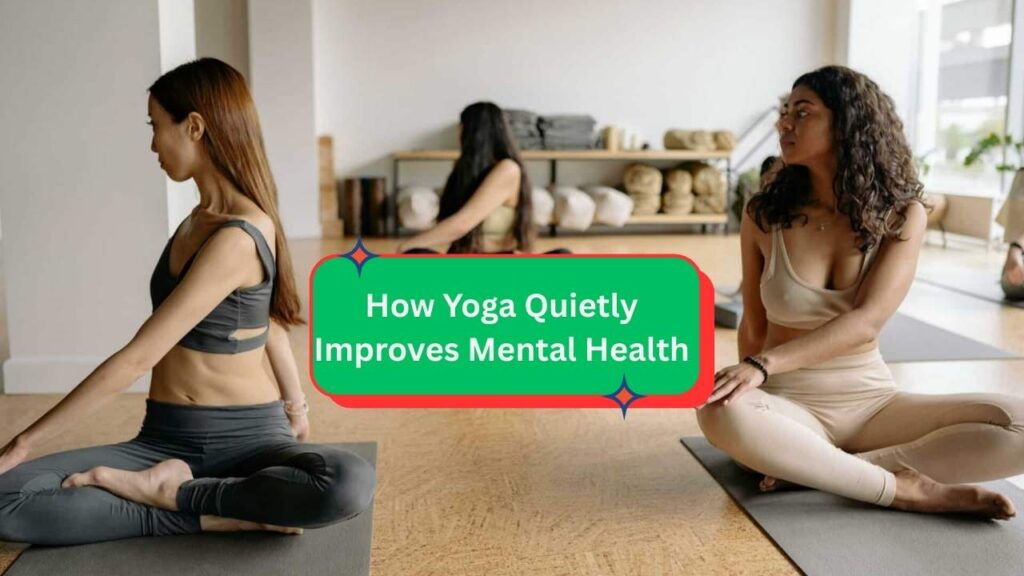
How Yoga Quietly Improves Mental Health
Yoga is often seen as physical exercise, but its deeper effects are mental and emotional. Through slow movement and steady breathing, it helps the nervous system shift from stress mode into a more relaxed state.
This change does not happen loudly or instantly. Instead, yoga works gradually, creating small improvements in how you respond to pressure, handle emotions, and experience daily life.
Over time, these quiet shifts build stronger emotional balance, clearer thinking, and a greater sense of calm that extends beyond the mat.
It Calms the Stress Response
When you feel anxious or overwhelmed, your body reacts as if there is danger. Muscles tighten, breathing becomes shallow, and your heart rate increases.
Yoga helps interrupt this pattern by slowing the breath and relaxing the muscles. As the body settles, the brain receives signals that it is safe to relax.
Breathing Becomes a Tool, Not an Accident
Many people do not notice their breathing until they feel out of breath or anxious. Yoga teaches you to control and deepen each breath.
- Slower breathing reduces tension
- Steady rhythm supports focus
- Deep breaths help you feel grounded
These breathing skills often carry into everyday life, helping you stay calmer during difficult situations.
It Creates Space Between You and Your Thoughts
The mind often jumps quickly between past regrets and future worries. Yoga brings attention back to the present moment through movement and breath, which gives your thoughts less power to spiral.
This mental pause does not erase problems, but it reduces their intensity. With practice, you learn to observe thoughts without feeling pulled into every one of them.
Physical Release Supports Emotional Relief
Stress is not only mental. It also stays in the body, especially in the shoulders, neck, and hips. Over time, this physical tightness can increase feelings of discomfort and emotional strain.
Gentle stretching during yoga helps release this stored tension. When the body begins to feel lighter and more comfortable, the mind often follows with a similar sense of ease.
It Builds Emotional Stability Over Time
Yoga encourages patience and steady effort. Holding poses, focusing on breath, and staying present during discomfort teach the mind how to stay balanced rather than reacting quickly.
| Before Regular Yoga | After Regular Yoga |
|---|---|
| Quick reactions | More thoughtful responses |
| Frequent tension | More relaxed state |
| Emotional ups and downs | Greater balance |
These changes may feel small at first, but with regular practice they grow into stronger emotional control, better stress handling, and a deeper sense of calm that stays with you throughout daily life.
Better Sleep Supports a Healthier Mind
A restless mind often makes it difficult to fall asleep or stay asleep. Yoga helps calm mental activity and relax the body, making rest come more naturally and feel more refreshing.
Better sleep supports clearer thinking, improved mood, and stronger emotional resilience, all of which are important for overall mental health.
A Gentle Way to Strengthen Mental Well Being
Yoga is not a replacement for professional care when needed, but it can be a powerful daily support. It offers a safe space to slow down, breathe deeply, and reconnect with your body in a calming way.
Even short sessions can help you feel more grounded, more aware of your emotions, and less overwhelmed by daily demands.
Quiet Practice, Stronger Mind
Mental strength often grows from small, consistent actions rather than dramatic changes. Yoga provides a quiet and steady path toward balance, helping you build calm, resilience, and self-awareness over time.
Through regular practice, you may find that challenges still appear, but your ability to handle them feels stronger and more stable than before.