
Anxiety does not always come with a clear reason. Sometimes it appears as a racing heart, restless legs, or thoughts that refuse to slow down. You try to distract yourself, scroll your phone, or take deep breaths, but your body still feels on edge.
In moments like this, the problem is not only in your thoughts. Your nervous system is in high alert, as if you need to react to danger. Until the body feels safe again, the mind struggles to settle.
That is why certain yoga poses can work faster than mental techniques. They help your body shift out of stress mode and into a state of support, stillness, and calm without requiring intense effort.
This One Yoga Pose Can Calm Anxiety in Minutes
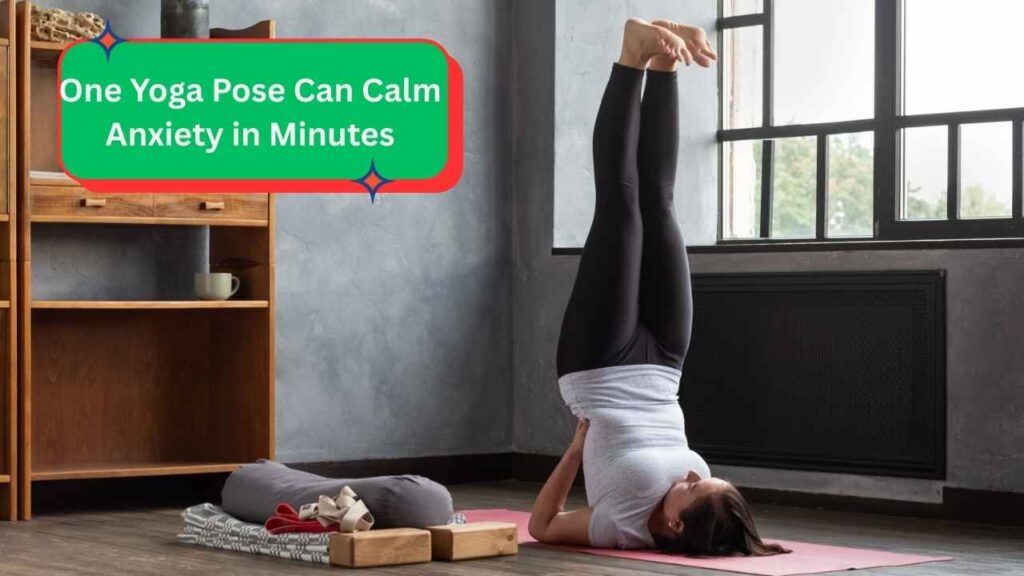
The pose is called Legs Up the Wall. It may look simple, but it changes how your body distributes effort and tension. With your back resting and legs supported, your system receives a strong signal that it can stop bracing and start relaxing.
Instead of trying to fight anxious thoughts, this posture changes your physical state first. When the body softens, breathing slows naturally, and the mind often follows with a sense of relief.
Why This Pose Works So Quickly
Anxiety keeps your body prepared for action, even when no real threat is present. Muscles tighten, breathing shortens, and your heart works harder than needed. This pose gently interrupts that stress pattern by placing you in a supported, non demanding position.
When your body is supported by the floor and wall, it no longer needs to hold itself up. That physical safety encourages your brain to reduce stress signals and begin shifting toward a calmer internal state.
What Happens in Your Body
While resting in this pose, your system begins making subtle adjustments that support relaxation instead of tension. These changes may feel gentle, but together they help lower anxiety and physical stress.
- The nervous system moves toward a calmer state
- Breathing becomes deeper and more regular
- Tension in the legs and lower back starts to ease
- The brain receives signals of physical safety
As these responses build, your body leaves alert mode and settles into a more stable rhythm, making it easier for your thoughts to slow and your chest to feel less tight.
How to Do the Pose
You do not need yoga experience or special flexibility to try this posture. The goal is comfort and support, not stretching deeply or holding effort in the body.
- Sit sideways close to a wall.
- Slowly lie back and swing your legs up the wall.
- Let your arms rest beside you with palms facing upward.
- Close your eyes and breathe gently through your nose.
Allow your body weight to drop into the floor and stay for five to ten minutes without trying to force anything, letting stillness do most of the work.
Use Your Breath to Deepen the Calm
Breathing is a powerful bridge between your body and mind. In this pose, your body is already supported, so the breath can become slower and more natural without pressure.
| Fast Anxious Breathing | Slow Calm Breathing |
|---|---|
| Shallow and rushed | Deep and steady |
| Keeps muscles tight | Encourages muscles to release |
| Signals stress to brain | Signals safety to brain |
As your breathing lengthens and softens, your nervous system receives steady messages that it can relax, which helps the anxious feeling lose intensity over the next few minutes.
When This Pose Helps the Most
This posture is especially useful during moments when anxiety rises suddenly and you feel overwhelmed without knowing exactly why. It works as a physical reset that does not depend on strong concentration.
You might try it after a long day, before bed, during an afternoon stress spike, or anytime your body feels restless and your mind will not slow down.
Calm Starts in the Body
Anxiety often feels mental, but relief frequently begins with physical signals of safety. By changing how your body is positioned and how you breathe, you influence the stress response directly.
Sometimes the fastest way to quiet the mind is not through effort, but through stillness, support, and giving your body permission to stop holding tension.