
Improving flexibility does not have to be difficult or time-consuming. With the right yoga poses, beginners can gently stretch their muscles, reduce stiffness, and feel more comfortable in daily movements. This post shares simple and effective yoga poses that help improve flexibility naturally and safely.
If you are looking for an easy and natural way to become more flexible, this post is for you. Read on to discover simple yoga poses that beginners can practice comfortably at home.
Beginner Friendly Yoga Poses to Improve Flexibility Naturally
This post highlights 11 beginner-friendly yoga poses that help improve flexibility naturally and safely. Each pose is simple to practice and focuses on gently stretching and strengthening different parts of the body.
With regular and mindful practice, these yoga poses can reduce stiffness, improve posture, and enhance overall body movement. They are ideal for beginners who want to stay flexible, relaxed, and healthy without putting strain on the body.

Here are the 11 easy and effective yoga poses that beginners can practice to improve flexibility naturally and comfortably.
1. Mountain Pose (Tadasana)
Mountain Pose is the foundation of many standing yoga poses. It helps beginners understand correct posture and body alignment. Practicing this pose regularly improves balance and stability.
- Improves posture and body alignment.
- Strengthens legs and core muscles.
- Gently stretches the spine.
- Increases body awareness and balance.
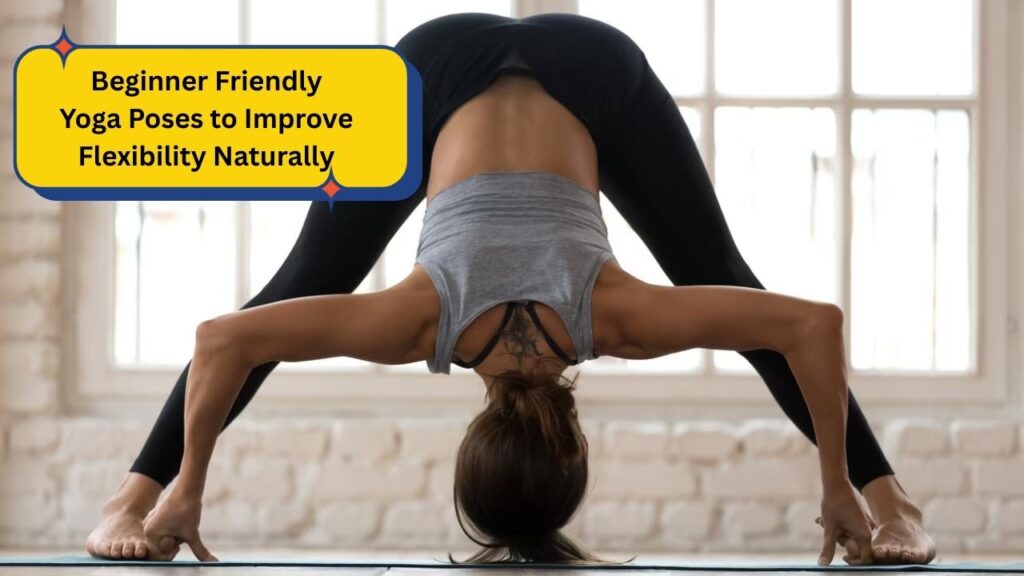
2. Forward Fold (Uttanasana)
This pose provides a deep stretch to the back and legs. It is especially helpful for releasing tightness caused by long sitting hours. It also helps calm the mind.

- Stretches hamstrings and lower back.
- Improves flexibility of the spine.
- Reduces stiffness in the legs.
- Promotes relaxation and mental calm.
3. Downward Facing Dog (Adho Mukha Svanasana)
Downward Facing Dog is a full-body stretch suitable for beginners. It helps lengthen the spine while strengthening muscles. Regular practice improves overall flexibility.
- Lengthens the spine and legs.
- Improves shoulder and back flexibility.
- Strengthens arms and legs.
- Reduces body tightness.
4. Child’s Pose (Balasana)
Child’s Pose is a gentle resting posture that relaxes the body. It helps stretch the lower back and hips. This pose is ideal during breaks in practice.
- Relieves tension from the spine.
- Gently stretches hips and thighs.
- Reduces stiffness and fatigue.
- Calms the mind and body.
5. Cat–Cow Pose (Marjaryasana–Bitilasana)
This pose involves slow and controlled spinal movements. It improves flexibility and mobility of the spine. It is commonly used as a warm-up pose.

- Improves spinal flexibility.
- Reduces stiffness in the back and neck.
- Enhances posture and coordination.
- Gently warms up the body.
6. Cobra Pose (Bhujangasana)
Cobra Pose gently bends the spine backward. It helps improve flexibility in the upper and lower back. This pose is beneficial for posture improvement.
- Strengthens and stretches the spine.
- Improves back flexibility.
- Reduces stiffness in the lower back.
- Helps correct poor posture.
7. Seated Forward Bend (Paschimottanasana)
This calming stretch targets the spine and leg muscles. It should be practiced slowly and without strain. Regular practice improves flexibility over time.
- Improves flexibility of the spine.
- Stretches hamstrings and lower back.
- Reduces tension from prolonged sitting.
- Promotes relaxation and focus.
8. Butterfly Pose (Baddha Konasana)
Butterfly Pose helps open the hips and inner thighs gently. It is ideal for beginners with tight hip muscles. This pose also improves sitting comfort.

- Improves hip flexibility.
- Reduces stiffness in inner thighs.
- Helps relax the lower body.
- Supports better sitting posture.
9. Triangle Pose (Trikonasana)
This standing pose stretches the side body and legs. It improves balance while increasing flexibility. It is simple yet very effective.
- Stretches hips, legs, and spine.
- Improves side body flexibility.
- Strengthens legs and core.
- Enhances balance and stability.
10. Bridge Pose (Setu Bandhasana)
Bridge Pose stretches the spine while opening the chest. It helps improve flexibility and strengthen the back. It is suitable for beginners when done gently.
- Improves spinal flexibility.
- Strengthens lower back muscles.
- Stretches chest and shoulders.
- Reduces stiffness in the back.
11. Supine Spinal Twist (Supta Matsyendrasana)
This relaxing pose gently twists the spine to release tension. It is best done at the end of a yoga session. It supports flexibility and relaxation.

- Improves spinal mobility.
- Relieves lower back tension.
- Reduces stiffness in the spine.
- Promotes deep relaxation.
Key Highlights: Beginner Yoga Poses for Flexibility
| Total Yoga Poses | 11 beginner-friendly poses. |
| Difficulty Level | Easy and suitable for beginners. |
| Practice Duration | 15–25 minutes per session. |
| Ideal Frequency | 4–6 times per week. |
| Target Areas | Spine, hips, legs, shoulders, back. |
| Main Benefits | Improved flexibility and reduced stiffness. |
| Suitable For | Beginners and all age groups. |
| Equipment Needed | Yoga mat and comfortable clothing. |
| Best Time to Practice | Morning or evening on an empty stomach. |
Why Flexibility Is Important for Overall Health
Flexibility helps your muscles and joints move freely and comfortably. It reduces the risk of injuries, improves posture, and supports better balance in daily activities. A flexible body also experiences less muscle stiffness and fatigue. Over time, it helps maintain overall mobility and physical comfort.
Tips for Beginners to Improve Flexibility Safely
Beginners should start slowly and focus on proper form rather than deep stretches. Breathing calmly during each pose helps the muscles relax naturally. It is important to be consistent and patient with practice. Never force the body into painful positions.
Precautions to Keep in Mind During Practice
Always warm up before starting yoga to avoid muscle strain. Stop immediately if you feel sharp pain or discomfort. People with injuries or medical conditions should consult a professional before practicing. Practicing on a mat in a safe space helps prevent slips and injuries.
How Long Does It Take to See Results
With regular practice, beginners may notice improved flexibility within a few weeks. Small changes like reduced stiffness can appear early on. Long-term flexibility improves gradually with consistent effort. Staying patient and regular is the key to lasting results.