

Yoga is a gentle yet powerful way to strengthen your glutes while improving balance and flexibility. With the right poses, you can activate key lower-body muscles and support better movement in your everyday life.
In this post, you’ll discover 11 effective yoga poses designed to build strong, toned glutes without equipment. Read this post to learn how each pose works, its benefits, and how to add them easily to your daily fitness routine.
11 Yoga Poses for Strong Glutes
Yoga is a simple and effective way to build strong, toned glutes while improving balance and flexibility. The poses covered in this post focus on activating the right muscles, helping support better posture and smoother everyday movement.
By practicing these yoga poses regularly, you can strengthen your lower body without heavy equipment or intense workouts. Adding them to your routine can boost overall fitness and make daily activities feel easier and more comfortable.

Key Highlights: Yoga Poses for Strong Glutes
| Total Yoga Poses | 11 Glute-Strengthening Poses |
| Target Muscles | Glutes, thighs, hips, hamstrings, core |
| Skill Level | Beginner to Advanced |
| Equipment Needed | Yoga mat only |
| Practice Type | Strength, balance, and flexibility |
| Ideal Session Time | 15–30 minutes |
| Frequency | 3–5 times per week |
| Key Benefits | Stronger glutes, |
Chair Pose (Utkatasana)
Chair Pose is a powerful standing posture that deeply engages the glutes and thighs. It mimics the action of sitting, helping build lower-body strength and endurance. Regular practice improves stability and posture.
- Activates glutes, quads, and hamstrings.
- Builds strength in the lower body.
- Improves balance and body control.
Warrior I (Virabhadrasana I)
Warrior I is a strong foundational pose that targets the glutes while opening the hips and chest. It helps develop leg strength and overall body alignment. This pose also builds confidence and focus.
- Strengthens glutes and front thigh muscles.
- Stretches hips and hip flexors.
- Improves stability and posture.
Warrior II (Virabhadrasana II)
Warrior II is excellent for building endurance in the glutes and legs. Holding this pose increases muscle engagement and mental focus. It also enhances hip mobility and balance.

- Engages glutes and inner thighs.
- Builds lower-body stamina.
- Improves hip and knee stability.
Warrior III (Virabhadrasana III)
Warrior III is a challenging balance pose that strongly activates the glutes. It helps improve coordination while strengthening the legs and core. This pose demands control and body awareness.
- Intensely strengthens glutes and hamstrings.
- Improves balance and coordination.
- Engages core muscles for stability.
Goddess Pose (Utkata Konasana)
Goddess Pose is a deep squat-style posture that fires up the glutes and inner thighs. It is great for building lower-body power and endurance. This pose also promotes hip flexibility.
- Targets glutes, thighs, and hips.
- Builds strength through a wide stance.
- Improves hip mobility and posture.
Bridge Pose (Setu Bandhasana)
Bridge Pose is a gentle backbend that strongly activates the glutes. It helps strengthen the lower body while opening the chest and spine. This pose is suitable for beginners and advanced practitioners.

- Strengthens glutes and lower back.
- Improves spinal flexibility.
- Helps relieve lower-body tension.
Locust Pose (Salabhasana)
Locust Pose is a prone posture that engages the glutes and back muscles. It helps build strength in the posterior chain. Regular practice improves posture and spinal support.
- Activates glutes and lower back muscles.
- Strengthens the entire backside of the body.
- Improves posture and spinal stability.
Crescent Lunge (Anjaneyasana)
Crescent Lunge deeply targets the glutes while stretching the hips. It helps improve balance and lower-body strength. This pose is excellent for daily mobility and stability.
- Strengthens glutes and legs.
- Stretches hip flexors.
- Improves balance and coordination.
Half Moon Pose (Ardha Chandrasana)
Half Moon Pose is a balance-focused posture that activates the glutes and outer hips. It enhances coordination while strengthening the legs. This pose also improves body awareness.

- Engages glutes and hip stabilizers.
- Improves balance and focus.
- Strengthens legs and core muscles.
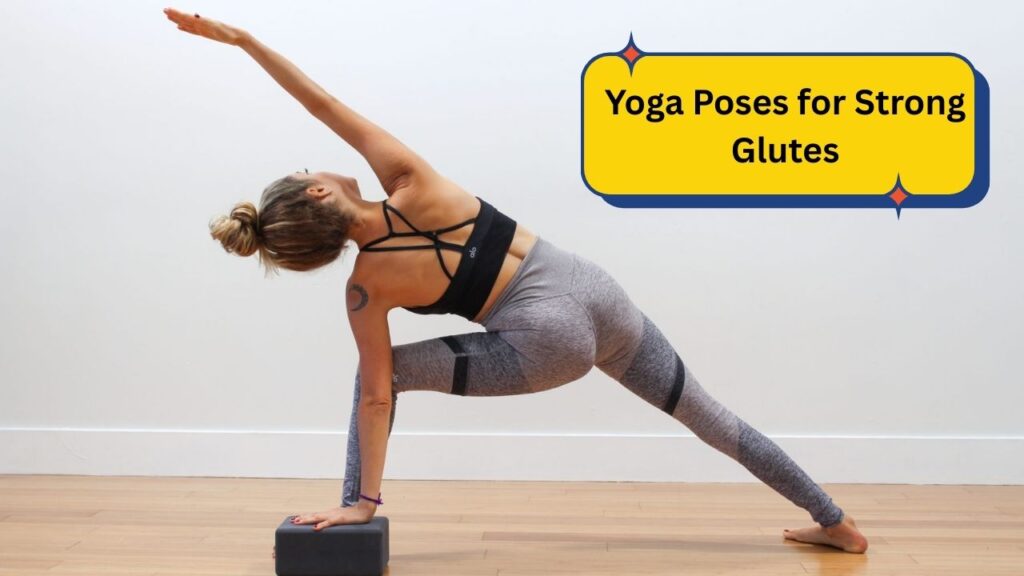
Extended Side Angle Pose (Utthita Parsvakonasana)
Extended Side Angle Pose builds strength in the glutes while stretching the sides of the body. It promotes stability and flexibility at the same time. This pose supports healthy hip movement.
- Strengthens glutes and thighs.
- Improves hip and spine flexibility.
- Enhances overall body balance.
Single-Leg Chair Pose (Eka Pada Utkatasana)
Single-Leg Chair Pose is an advanced variation that intensifies glute activation. Balancing on one leg builds strength and control. It is excellent for improving functional fitness.
- Maximizes glute engagement on one side.
- Improves balance and coordination.
- Builds strong legs and core stability.
Why Strong Glutes Matter for Everyday Movement
Strong glutes play a key role in everyday movements like walking, climbing stairs, and lifting objects. They support proper posture and reduce strain on the lower back. Well-developed glutes also help improve balance and overall body stability in daily life.

How Yoga Helps Build Strong and Toned Glutes
Yoga strengthens the glutes by using bodyweight poses that require control and balance. Holding poses activates deep muscle fibers, helping tone and build strength naturally. Regular yoga practice also improves flexibility and muscle coordination.
Top Yoga Poses to Activate and Strengthen Your Glutes
Yoga poses that involve squats, lunges, and balance work directly target the glute muscles. These poses activate multiple muscle groups at once, making them effective and efficient. Practicing them consistently helps improve strength and endurance.
Add These Yoga Poses to Your Daily Fitness Routine
Adding glute-focused yoga poses to your daily routine can improve lower-body strength over time. Even a short session can help activate muscles and increase mobility. Consistent practice supports better movement and long-term fitness results.

It would be nice to see an example photo or illustration of each pose going g forward